
Like many other countries in sub-Saharan Africa, Ethiopia is a country of diverse cultures, traditions and histories.
In spite of its ancient civilizations and being the only country in the continent that was not colonized as well as one of the oldest territorial integral nation in the world, Ethiopia today is one of the least developed countries with low development indicators. Besides, the country is now the second-most populous nation in Africa, with an estimated population of 110 million.
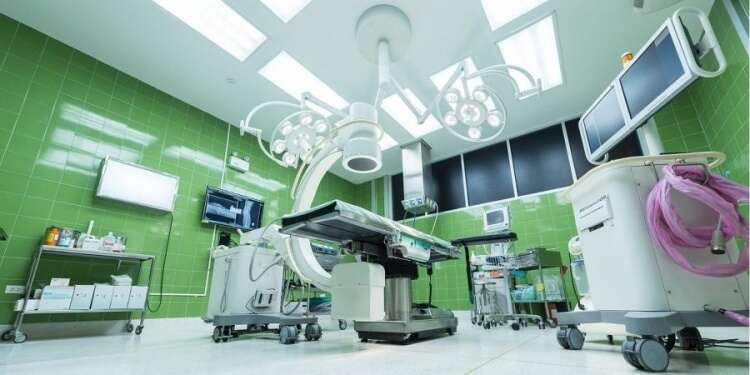
The country struggles with persistently high mortality due to access to health services. Easy access to health services is limited, particularly for the large proportion of people living in rural areas. Expanding access to health services in order to sustain social and economic gains will require strengthening the country’s health infrastructure. However, there is a wide gap in terms of quality infrastructure provisions.
The recent economic growth and advances in education, health, and poverty reduction have contributed to the overall improvement in the health of Ethiopians. But the country’s population is rising at an increasing rate. This further undermines the gains achieved so far in the sector.
Importantly, Ethiopia has taken critical steps in policy and programs to improve the country’s health status. Over the recent three years, the country has made notable progress in education, health, and other key areas to pave a way to alleviate poverty and to improve the living standard of the people. Yet, continued high population growth, drought, and internal conflict exert pressure on the country’s resources and erodes its capacity to provide essential health services. This shows us that relevant, helpful, and supportive activities are expected of all stakeholders as well as from private and public partners of the sector.
Read More here : https://furtherafrica.com/2022/03/09/ethio-health-exhibition-is-revitalizing-the-sector/
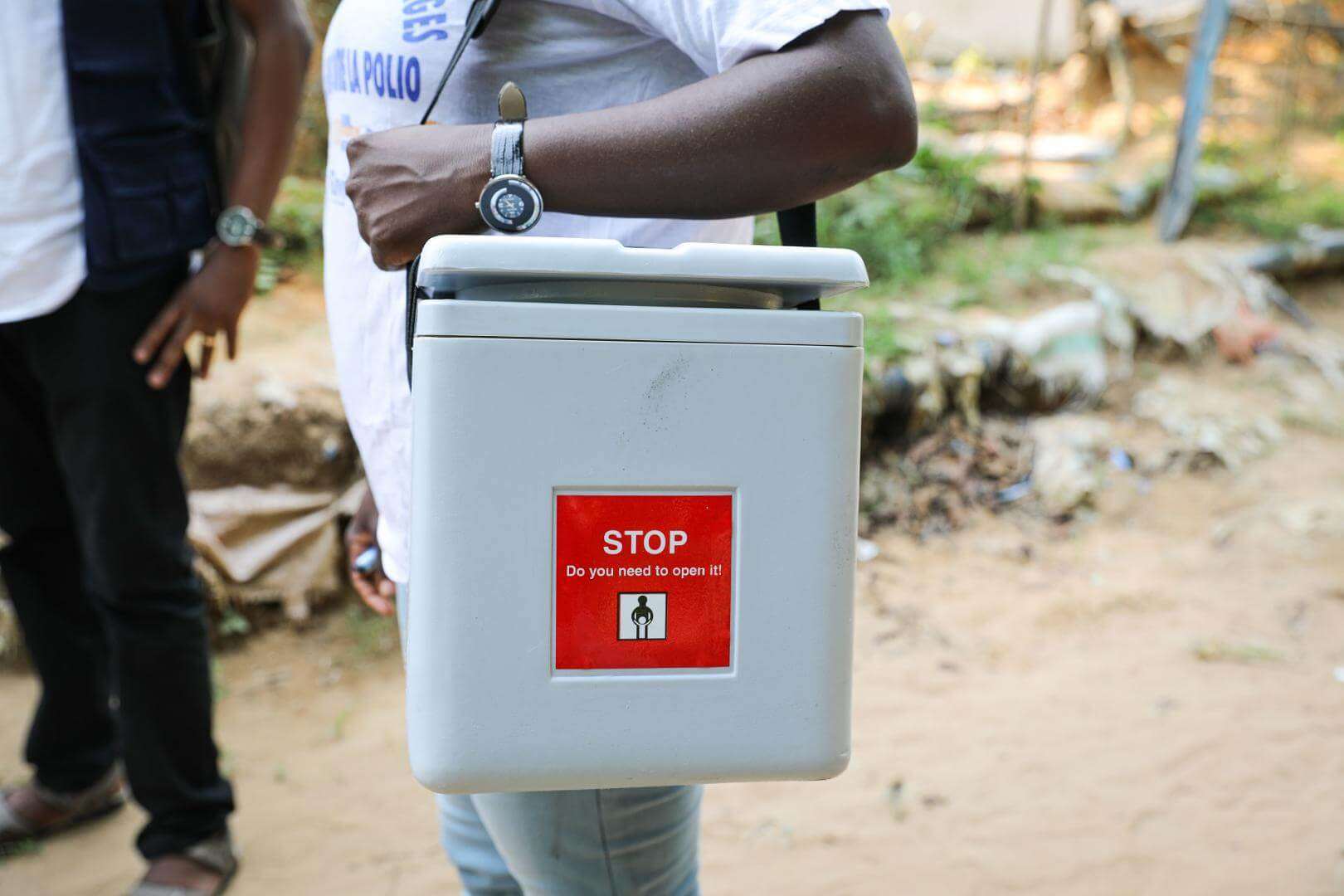
The health authorities in Malawi have declared an outbreak of wild poliovirus type 1 after a case was detected in a young child in the capital Lilongwe. This is the first case of wild poliovirus in Africa in more than five years.
Africa was declared free of indigenous wild polio in August 2020 after eliminating all forms of wild polio from the region. Laboratory analysis shows that the strain detected in Malawi is linked to the one that has been circulating in Sindh Province in Pakistan. Polio remains endemic in Afghanistan and Pakistan. As an imported case from Pakistan, this detection does not affect the African region’s wild poliovirus-free certification status.
“As long as wild polio exists anywhere in the world all countries remain at risk of importation of the virus,” said Dr Matshidiso Moeti, World Health Organization (WHO) Regional Director for Africa. “Following the detection of wild polio in Malawi, we’re taking urgent measures to forestall its potential spread. Thanks to a high level of polio surveillance in the continent and the capacity to quickly detect the virus, we can swiftly launch a rapid response and protect children from the debilitating impact of this disease.”

Ethiopia Health Care grew by 13% in 2020/21 FY. This figure is one of the fastest rates of growth last year recorded among the major GDP components, based on a recent study.
Other major GDP components that experienced the fastest growth rates last year were:
Banking – up 9%
Transportation/communications – up 7%
Construction – up 7%
According to Cepheus study, mining was the leading-fastest growing sub-sector both last year and over the previous five years, despite its extremely small initial base which is less than 1 percent of total GDP.
Ethiopia has a large rural and subsistence agriculture population with limited access to safe drinking water, housing, sanitation, food, and health care. The government has made substantial investments in the public health sector, which has resulted in improved health outcomes.
According to the International Trade Administration Bureau of the United States, the Ethiopia Food and Drug Authority (EFDA) is being strengthened to provide increased regulatory oversight for the registration, importation, and quality of medicines, supplies, and equipment into the Ethiopian market.
For medicine registration and licensing activities, the EFDA is currently implementing a “zero backlogs” strategy. EFDA has digitized the importation and registration of health commodities into Ethiopia by utilizing the programs listed below:
i-Register: is used by importers for application of market authorization and product registration (new products, request registration exceptions and renew existing registrations).
i-Import: is an online application used by importers to apply for and receive permits to import all health commodities. Ethiopia Pharmaceuticals Supplies Agency (EPSA) also has access to this application as they are participating in procurement activities.
i-Verify, an app-based health products tracker, provides regulators as well as public users with real-time visibility into movement of health commodities and products from manufacturer to the point of issue.
you can read more here
https://businessinfoeth.com/health-care-registered-the-fastest-rates-of-growth-last-year-up-13/

I-Verify, an app-based health products tracker, provides regulators as well as public users with real-time visibility into movement of health commodities and products from manufacturer to the point of issue. The Ethiopia Food and Drug Authority of Ethiopia already uses the app to detect and authenticate health commodities.
The application used to verify the authenticity of a product at any point in the supply chain by anyone and enables to track and trace health commodities from manufacturer to point of issue – throughout the health import process and supply chain. It’s also used to report unauthorized, defected, and counterfeit products in the market.
During the year 2020/21, USAID-funded Digital Health Activity (DHA) reported that it has supported the optimization of the i-Verify application to detect counterfeit products including fake COVID-19 vaccine.
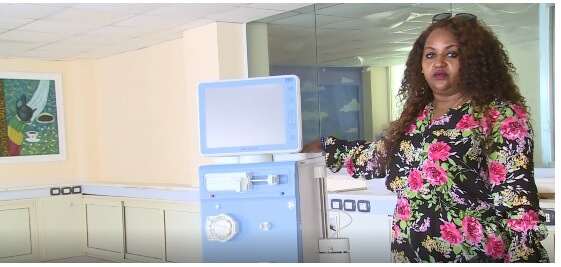
Addis Ababa December, December 31, 2021 (FBC) – An Ethiopian diaspora from Atlanta, Georgia, is going to open a state of the art dialysis unit at Menelik II Referral Hospital.
It is to be recalled that Prime Minister Abiy Ahmed made a call to the Ethiopian diaspora to come home for the upcoming Ethiopian Christmas and Epiphany holidays.
Among the diaspora who responded to the call, Tigist Abebe, Chief Executive Officer and Founder of Yeabe Medical Center and Rehabilitation said she has been doing various activities to start dialysis service with an outlay of over 10 million birr in Ethiopia over the past four months.
Tigist said some 30 machines have been delivered to the hospital and it is expected to start operation soon.
She added that the coming of the diaspora has many advantages, noting that even before the PM's call for homecoming, “some of us were exchanging ideas to come and do something to our country.”
Following the call, the motivation of the diaspora has grown greatly and they need to contribute to their motherland, following our footstep, the CEO stated.
There may be challenges like in any less developed countries, Tigist noted, adding that many things are being done by the government and a lot of things are being facilitated now.
From my own experience, a lot has changed. As a member of the diaspora, we do not have to take advantage of it and we have to be treated like any other fellow Ethiopian.
“I am very excited about this diaspora home coming and their response. But for those diaspora who come and request what to do, there are many things that they can see. What we need to do is take responsibility, contribute their share to schools, hospitals and support family to achieve something in a year,” she elaborated.
According to her, the diaspora need to leave their legacy in their country.
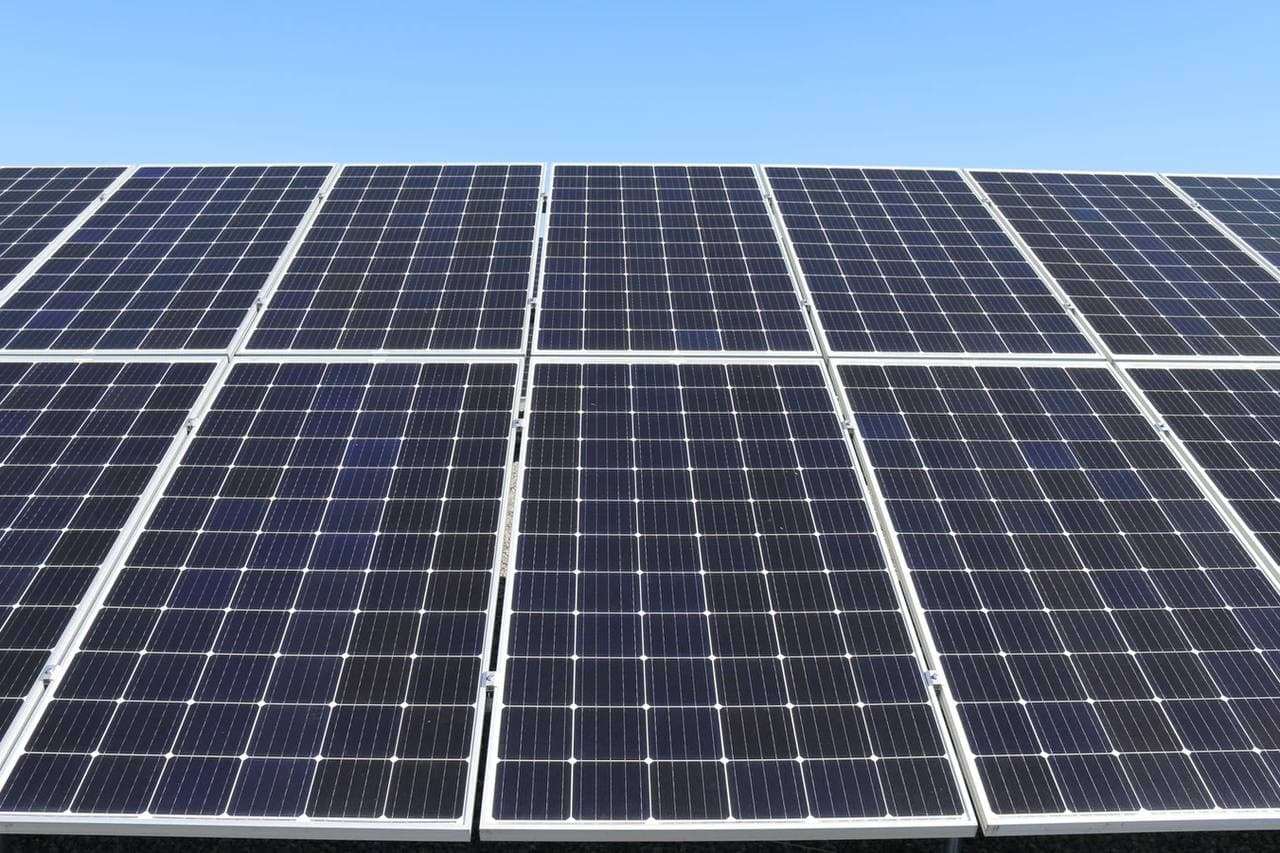
As many health centers are located in off-grid areas, Stiftung Solarenergie, Solar Energy Foundation Ethiopia, and GREEN LAMP collaborated on the sustainability of installed Solar Suitcases for Health Centers in Ethiopia. Over 240 Solar Suitcases have been installed in various parts of the country.
The installed Solar Suitcases are mostly in maternity departments to save the lives of women and children. Green Lamp is now collaborating with the Stiftung Solarenergie-Solar Energy Foundation to ensure the Solar Suitcases’ long-term viability.
Nothing More to load
No more pages to load